
Veterinary Orthopaedic Surgery

Elbow Arthroscopy for Dogs

Keyhole assessment and treatment for selected cases of developmental elbow disease, including medial coronoid disease (FMCP) and osteochondritis dissecans (OCD).

Direct joint assessment

A small camera lets the surgeon inspect joint surfaces and identify lesions that imaging may not fully define.

Targeted treatment

Instruments passed through small portals can address unstable fragments, damaged cartilage, and selected diseased bone.

An individual plan

The findings, degree of arthritis, limb alignment, and your dog's needs guide treatment and expected recovery.

Developmental elbow disease

A group of conditions, not one single problem

Developmental elbow disease (DED), often called elbow dysplasia, describes several conditions affecting a growing dog's elbow. Medial coronoid disease and humeral OCD are two lesions that may be assessed and treated arthroscopically.

Dogs may develop forelimb lameness, stiffness after rest or exercise, or discomfort when the elbow is moved. Both elbows can be affected. These signs have other possible causes too, so examination and appropriate imaging are important before deciding on treatment.

Read the DED and elbow dysplasia guide
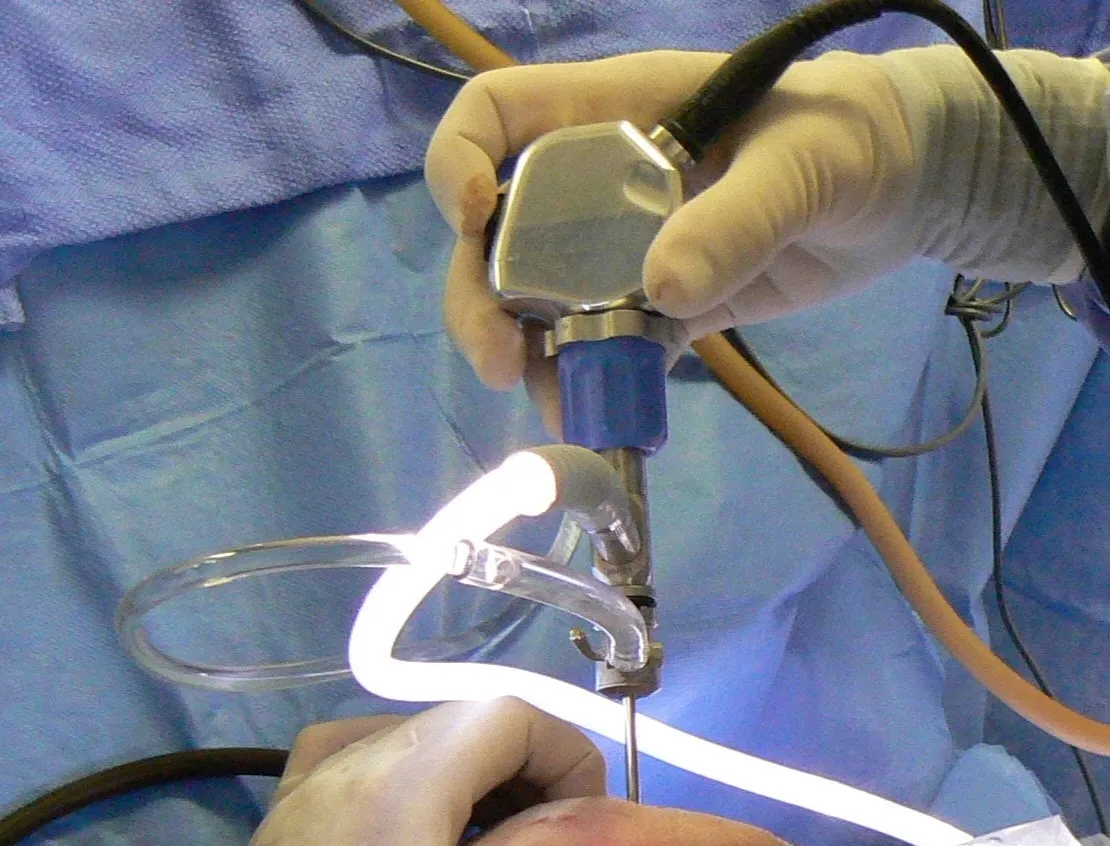
Veterinary surgeon performing arthroscopy on a dog's elbow

FMCP / medial coronoid disease

Arthroscopic management of the medial coronoid

Fragmented medial coronoid process (FMCP) is the traditional name for a visible fragment. The broader term medial coronoid disease (MCD) recognises that damage can range from cartilage softening and fissures to a detached fragment, with or without a clearly separated piece of bone.

Through small portals, the surgeon examines the joint and treats the lesions found. Depending on the appearance and stability of the tissue, this may involve removing loose fragments and selectively debriding damaged cartilage or diseased bone. A more extensive procedure, such as subtotal coronoidectomy, is considered only when the individual findings support it.

Arthroscopy treats the lesion, not every cause

Removing unstable or painful tissue may improve comfort, but it does not reverse the developmental shape of the joint or guarantee that arthritis will stop progressing. If substantial incongruity or medial-compartment overload is present, the surgeon may discuss whether another procedure is appropriate.

Humeral OCD

Treating an unstable cartilage flap

Osteochondritis dissecans (OCD) occurs when cartilage development is disrupted. A weakened area can separate from the underlying bone, leaving an unstable flap and an exposed defect on the humeral condyle.

Arthroscopy allows the surgeon to assess the defect and, when indicated, remove unstable cartilage and prepare the lesion margins. The aim is to leave a stable surface and support repair tissue formation. This repair tissue is not the same as the original smooth joint cartilage, so the lesion's size, location, and any existing arthritis matter when discussing likely results.

Assessment, surgery, and recovery

The work-up may include an orthopaedic examination and elbow radiographs. CT can be useful for mapping bone changes or clarifying a suspected coronoid lesion; whether it is recommended depends on the case. The surgeon uses the clinical findings and imaging together to decide whether arthroscopy is appropriate and whether one or both elbows need assessment.

After surgery, dogs need prescribed pain relief and a period of restricted activity, followed by a gradual, guided return to exercise. The schedule is individual and may include rechecks and physiotherapy. Your veterinary team will explain what to monitor and when activity can safely increase.

Frequently asked questions

Does arthroscopy cure elbow dysplasia?

No. Arthroscopy can treat specific lesions and may improve comfort and function, but it cannot change the underlying joint development or remove established arthritis. Ongoing weight management, appropriate exercise, and veterinary-guided arthritis care may still be needed.

Will every dog with FMCP need the same operation?

No. Coronoid disease varies from subtle cartilage damage to unstable fragments and more extensive bone changes. The arthroscopic treatment is selected according to the joint findings; some dogs may also need a discussion about biomechanical procedures.

Can both elbows be affected?

Yes. DED can affect both elbows, even if lameness is more obvious on one side. The examination and imaging help determine which joints are clinically relevant and whether further assessment is needed.

Dr Mark Tonzing - Orthopaedic Surgeon

Expert Surgery, Independent Care

Dr. Mark Tonzing BVSc(Hons) MACVSc(SA Surgery)

Operating out of Bardon Veterinary Hospital, BoneVet gives pet owners direct access to advanced orthopaedic and neurosurgical procedures without the rigid overhead or referral bureaucracy of corporate centers. Dr. Tonzing brings decades of surgical experience and precision-focused technique to every procedure.

Learn more about Dr. Tonzing →

Discuss your dog's elbow assessment

A consultation can help clarify the diagnosis, imaging options, and whether arthroscopy is suitable for your dog.

Book an Orthopaedic Consultation