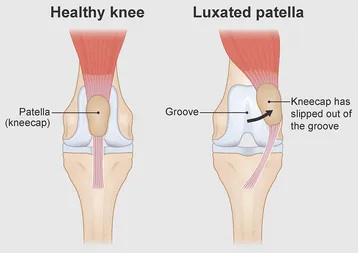
The patella, or kneecap, normally glides in a groove at the lower end of the femur as the knee bends and straightens. With patellar luxation, it slips out of that groove. It most often moves toward the inside of the knee (medial luxation), but it can also move toward the outside (lateral luxation).
Some dogs briefly skip or hold up a hind leg before walking normally again. Others develop a persistent limp, discomfort, or difficulty using the leg. The effect depends on how often the patella dislocates, how easily it can be put back into the groove, and the shape and alignment of the bones.
Patellar luxation is graded from I to IV based on examination findings. The grade is useful, but it is only one part of the decision: a dog's symptoms, overall limb alignment, and daily function matter too.
How Is It Diagnosed?
Diagnosis usually starts with an orthopaedic examination, during which the patella is assessed through knee movement and the limb is checked for pain, stability, and alignment. Radiographs may be recommended to evaluate the bones and plan treatment. Further imaging or investigation may be appropriate in more complex cases or when another knee problem is suspected.