Veterinary Orthopaedic Surgery

Fracture Repair for Dogs and Cats

A broken bone is painful and frightening. BoneVet provides orthopaedic assessment and fracture repair in Brisbane, with a surgical plan shaped by the injury, your pet's needs, and the best way to support healing.

Every Fracture Is Different

The bone, fracture pattern, patient, and surrounding tissue all influence which treatment is appropriate.

Biology and Stability

A repair needs to support the bone while respecting the blood supply and soft tissues that help it heal.

Recovery With a Plan

Restricted activity, follow-up checks, and a gradual return to movement are important parts of fracture care.

Understanding Fractures

Fractures can follow a fall, road accident, or other trauma. They range from a simple break in one part of a bone to complex injuries with several fragments, joint involvement, or damage to the surrounding muscles and skin. In growing pets, a fracture may also involve a growth plate.

The first step is to assess your pet's overall condition and the injured limb. Your veterinarian may recommend radiographs and, for some injuries, additional imaging to understand the fracture and plan treatment. Open fractures, where the skin over the injury is broken, need prompt veterinary attention because the wound and bone may be contaminated.

Fracture planning is about more than putting the bone back together. The repair needs to provide suitable stability while preserving the tissues and blood supply that support bone healing. The best approach depends on the individual injury and patient.

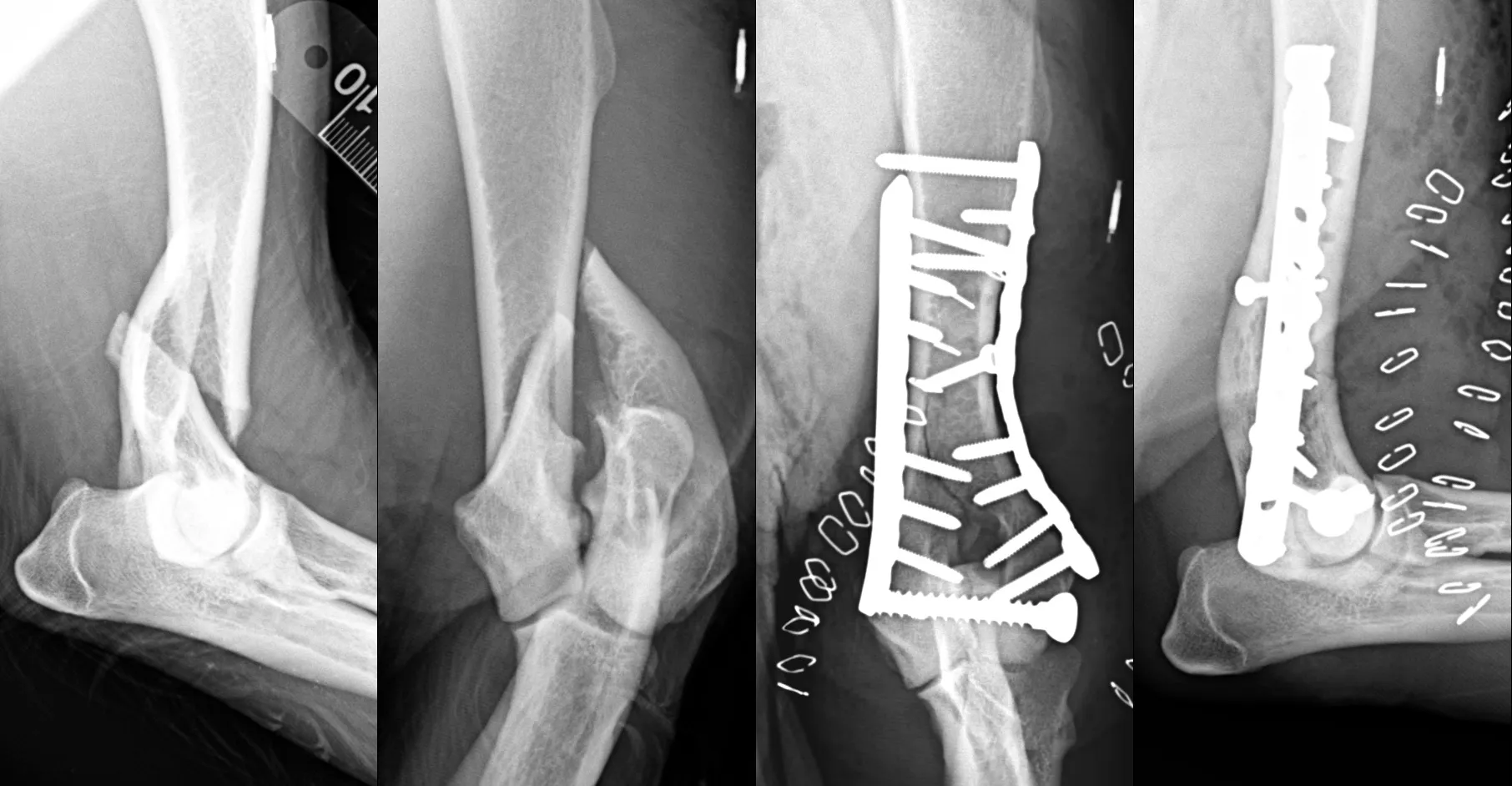
Post-operative radiograph showing plate-and-screw fixation used to stabilise a complex fracture
Radiographs showing a humeral condylar Y-fracture before and after bilateral plate-and-screw fixation. The repair method is selected for the fracture and the patient.

If You Suspect a Fracture

Keep your pet as still and calm as you safely can, and contact a veterinarian promptly. Avoid manipulating the limb or applying a splint unless a veterinarian instructs you to. Do not give human pain medicines unless specifically directed by a veterinarian. A wound over a suspected fracture needs urgent assessment.

Fracture Repair Options

Not every fracture needs an operation, and there is no single repair method for every break. When surgery is recommended, the aim is to restore useful alignment and provide stability suited to the fracture while protecting the biological environment needed for healing.

Plates and Screws

A plate secured with screws can stabilise many fractures. Depending on the pattern and location, the bone fragments may be reconstructed or the plate may bridge the fracture zone. Locking plate systems can provide fixed-angle support, and minimally invasive plate osteosynthesis (MIPO) may be considered when the fracture and patient are suitable.

Pins, Wires, and Combined Fixation

Intramedullary pins, cerclage wires, or other implants may be used alone in selected situations or combined with a plate or external fixator. The choice depends on the forces acting on the bone and the stability needed for that specific repair.

External Skeletal Fixation

An external skeletal fixator uses pins placed into the bone and connected to a frame outside the limb. It can be useful for certain fractures, including some open injuries where access to the skin and wound for ongoing care is important. Pin-site care and follow-up are part of treatment.

Splints or Other Non-Surgical Care

Some fractures may be managed with external support and activity restriction rather than surgery. This is appropriate only for selected injuries and requires careful monitoring, since bandages and splints need regular checks and may not adequately stabilise every fracture.

A case-specific recommendation

At consultation, the surgeon reviews your pet's imaging and clinical findings, explains the reasonable treatment options, and discusses the expected care at home. The recommendation accounts for the fracture pattern, soft-tissue injury, age and size of your pet, and your pet's overall health.

Recovery and Aftercare

The repair is only one part of healing; careful aftercare matters too.

Early

Comfort and Restricted Activity

Your pet will have an individual pain-management plan and activity instructions. Confinement and short, controlled toileting breaks are often needed while the repair begins to heal. Prevent running, jumping, and unsupervised activity as directed by your veterinary team.

Recheck

Wound and Healing Checks

Follow-up appointments help assess comfort, limb use, the incision, and any external fixation or bandage. Radiographs may be recommended to evaluate bone healing before activity is increased.

Gradual

Return to Movement

Activity is increased step by step when your surgeon considers it appropriate. Some pets may benefit from a rehabilitation plan to rebuild strength and mobility. Healing time varies, so do not use apparent comfort alone to decide when to resume normal activity.

Dr Mark Tonzing - Orthopaedic Surgeon

Expert Surgery, Independent Care

Dr. Mark Tonzing BVSc(Hons) MACVSc(SA Surgery)

Operating out of Bardon Veterinary Hospital, BoneVet gives pet owners direct access to advanced orthopaedic and neurosurgical procedures without the rigid overhead or referral bureaucracy of corporate centers. Dr. Tonzing brings decades of surgical experience and precision-focused technique to every procedure.

Learn more about Dr. Tonzing →

Frequently Asked Questions

What should I do if my pet may have broken a bone?

Keep your pet as still and calm as you safely can and contact a veterinarian promptly. Do not manipulate the limb, try to splint it, or give human pain medicine unless a veterinarian specifically instructs you. A wound over a suspected fracture needs urgent veterinary assessment.

Does every fracture need surgery?

No. Treatment depends on the fracture's location and pattern, your pet's age and size, surrounding tissue damage, and whether a joint or growth plate is involved. Some fractures can be managed without surgery; others need surgical stabilization.

How are fractures repaired?

Depending on the injury, repair may use plates and screws, pins or wires, an external skeletal fixator, or a combination of techniques. The surgeon selects a method to provide suitable stability while considering the bone, fracture pattern, and surrounding soft tissues.

How long does recovery take?

Healing time varies with the bone involved, fracture pattern, patient, and repair. Recovery usually requires restricted activity, follow-up examinations, and imaging when recommended. Your surgeon will advise when activity can be increased based on your pet's progress.

Do I need a referral for a consultation?

BoneVet accepts referrals from general practice veterinarians, and pet parents can also contact the clinic directly. If your pet has just been injured, seek prompt veterinary assessment first.

Your pet may have a fracture?

Arrange a veterinary assessment to understand the injury and the treatment options. For a recent injury, contact a veterinarian promptly.