
Veterinary Orthopaedic Surgery

Pancarpal Arthrodesis

A planned procedure to stabilise the carpus and reduce pain when the wrist joint is unstable, arthritic, injured, or no longer functioning normally.

Stabilises the carpus

The procedure creates a rigid joint to reduce abnormal motion and help the limb function more predictably.

Reduces pain

When instability or arthritis is driving pain, fusing the joint can provide substantial comfort.

Tailored to the case

The exact construct, implant choice, and aftercare depend on the pattern of damage and the dog's needs.

When this procedure may be recommended

Addressing severe carpal instability or arthritis

Pancarpal arthrodesis is most often considered when the carpus is painful, unstable, or no longer providing a useful range of motion. Conditions can include chronic ligament injury, severe carpal collapse, fractures involving the carpus, or advanced osteoarthritis causing persistent lameness.

In many dogs, the decision is based on how much pain the joint causes, the degree of instability, and whether more conservative options have failed or are unlikely to help. The goal is to create a more stable limb and improve weight-bearing comfort.

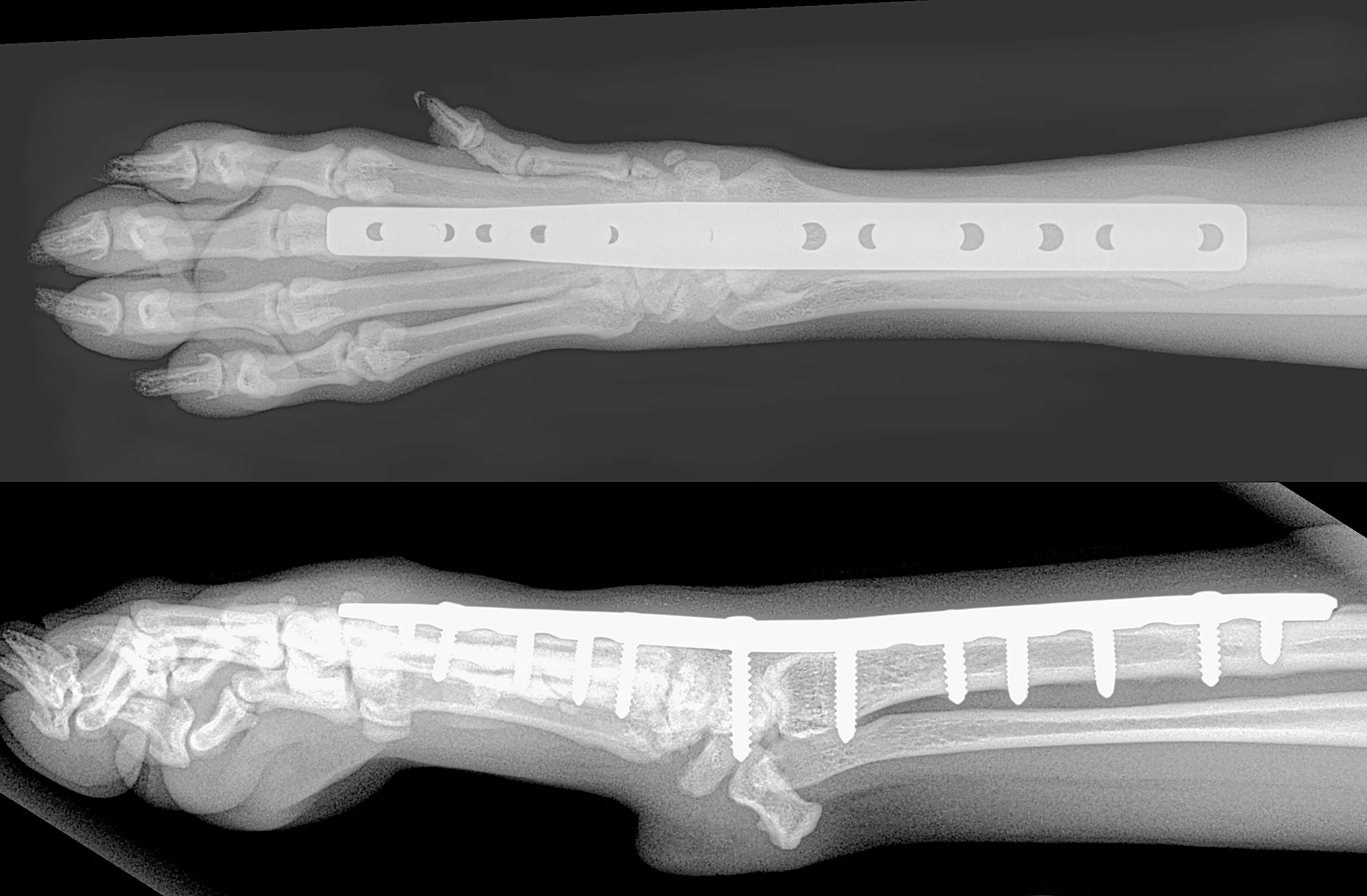
Orthopaedic radiographs showing a repaired fracture and surgical fixation

What the surgery involves

Creating a rigid, weight-bearing carpus

Pancarpal arthrodesis is a surgical fusion of the carpal bones. It aims to eliminate painful motion and convert the joint into a more stable structure for weight-bearing.

The procedure typically involves preparing the joint surfaces, removing disease or damaged cartilage where needed, and then using plates and screws to hold the bones in a corrected alignment while the fusion heals. Bone healing is gradual, and the limb may require a period of restricted activity while the carpus stabilises.

The trade-off is movement versus stability

A fused carpus loses normal flexion and extension at that joint. For many dogs, the benefit is a pain-free, stronger, more reliable forelimb, which is often preferable to ongoing instability or chronic discomfort.

Recovery

A step-by-step plan after surgery

Recovery usually starts with a bandage or splint, followed by controlled rest and later gradual return to activity. Some dogs need a structured rehabilitation plan, especially if there are other conditions affecting the same limb or if the initial problem was severe.

Follow-up assessments and radiographs help confirm the fusion is progressing as expected. Activity is typically increased slowly, guided by pain, healing, and the surgeon's observations. The goal is to protect the repair while helping the dog return to comfortable function without overloading the limb too early.

BoneVet approach

Individualised surgical planning

Pancarpal arthrodesis is not a one-size-fits-all operation. It is chosen only when the pattern of carpal damage and the dog's lifestyle support the balance between reduced motion and improved limb function. BoneVet assesses the joint, imaging, and clinical signs before recommending a treatment plan.

Frequently asked questions

Will my dog be able to run normally after surgery?

Many dogs return to comfortable activity, but the carpus will not move in the same way as a normal joint. The aim is functional stability and less pain rather than preserving full normal joint motion.

Is this only for a serious injury?

It is most often used for significant instability, chronic pain, or severe arthritis in the carpus. Some cases may be managed conservatively, but surgery is considered when the joint is not functioning well enough to provide a comfortable life.

How long does recovery take?

The fusion takes time to heal. Early recovery is focused on rest and protection, while later stages include gradual return to controlled exercise and reassessment with imaging. Your surgeon will outline the expected timeline based on your dog's case.