
BoneVet Orthopaedics Logo Veterinary Orthopaedic & Neurosurgical Service
Clinical Resource ← Back to Vet Portal

BODPUO Care Protocol

BoneVet Orthopaedic Post-Operative Management Guide

As a peripatetic surgical service, BoneVet relies on the exceptional ongoing care provided by our referring primary care teams. This protocol outlines the standard post-operative management expectations for our orthopaedic patients to ensure optimal recovery, aggressive pain management, and the early detection of any complications.

1

Phase 1: Immediate In-Hospital Care (0–24 Hours)

Analgesia & Monitoring

  • Continue IV fluid therapy until the patient is fully ambulatory and eating.
  • Administer scheduled methadone or buprenorphine as per the specific surgical orders.
  • Utilize a validated pain scoring system (e.g., Glasgow Composite) every 4 hours.

Incision & Joint Care

  • Apply cryotherapy (ice packing) to the surgical site for 10-15 minutes every 4-6 hours while hospitalized to manage acute edema.
  • Ensure the Primapore/Melolin dressing remains clean, dry, and intact.
  • Provide thick, supportive bedding and assist with sling-walking for all outdoor toilet breaks.
2

Phase 2: Discharge & Home Care (Days 1–14)

A comprehensive, written discharge appointment must be conducted with the pet parents. The primary clinic is responsible for dispensing the prescribed take-home medications and ensuring the owners understand the strict confinement rules.

Standard Discharge Dispensing:
  • NSAIDs: Meloxicam or Carprofen for 14-28 days (with food).
  • Neuropathic/Adjunct: Gabapentin (5-10 mg/kg PO TID) for 10-14 days to manage nerve pain and provide mild sedation for rest.
  • Antibiotics: Only if specifically requested by the surgeon (e.g., Cephalexin for specific implant protocols).
  • Elizabethan Collar: Mandatory 24/7 until suture removal.
3

Phase 3: Rechecks & Radiography

The 10–14 Day Recheck (Suture Removal)

Conducted by the primary care clinic's nursing or veterinary team.

  • Assess incision for discharge, excessive erythema, or dehiscence.
  • Remove skin sutures/staples.
  • Evaluate limb use at a walk; patients should be consistently toe-touching or bearing partial weight by this stage.
  • Clear the patient to begin 5-10 minute controlled, flat leash walks.

The 6-Week Radiographic Recheck

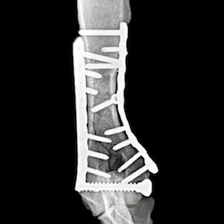
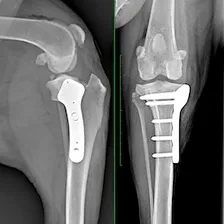
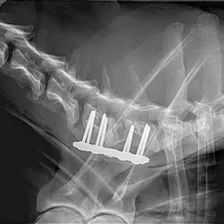
All osteotomies (TPLO, CBLO) and fracture repairs require 6-week post-operative orthogonal radiographs (sedated) to assess bone healing before clearing the patient for increased activity.

Submission Protocol: Please upload the 6-week DICOM files directly to the BoneVet Dropbox using the link in the footer. Dr. Tonzing will review the films and provide a written clearance report regarding osteointegration and implant stability.

Complication Management

If a patient presents with sudden deterioration in limb use, significant surgical site swelling, or suspected implant failure, do not hesitate to reach out directly. Early intervention is critical.

Direct Surgeon Contact For urgent post-operative clinical queries only.
0455 465 992